State of research on the issue
Insufficient awareness exists regarding the growing environmental threats resulting from biodiversity loss and the consequent decline in the climate resilience of ecosystems and human systems dependent on ecosystem services. Within the framework of this study, changes in soil indicators will be assessed.
The total heavy metal fractions defined under Ordinance No. 3/2008 as indicators of contamination are not sufficiently appropriate for system-level risk assessment. A more current approach involves determining the mobile fractions of heavy metals and metalloids in parallel with the concentrations of metals and ions in water. Since soil contamination is strongly pH-dependent, the pH reaction of surface waters is of critical importance.
Long-term heavy metal contamination poses a threat to human health and ecosystems due to their low biodegradability, bioaccumulation potential, environmental persistence and stability, and ecotoxicological properties. In recent years, the assessment of pollution impacts on the biological activity of soil microbial communities has become essential.
The present study selected an active mining area within the catchment of the Topolnitsa River as the study site.
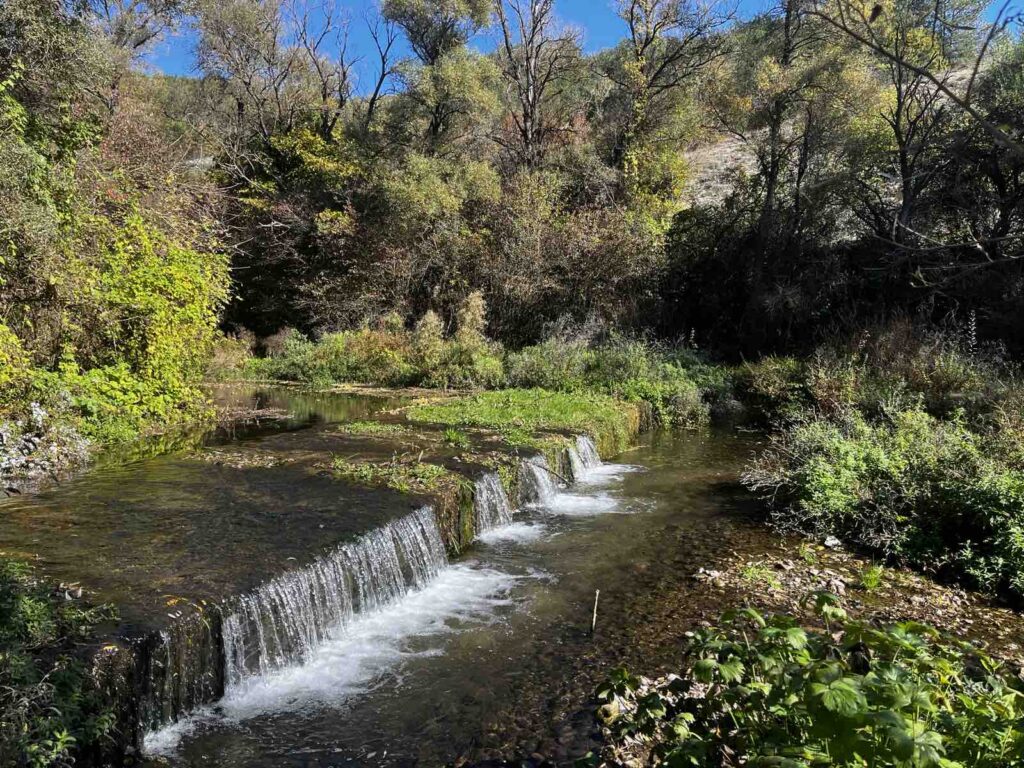
Along the course of the Topolnitsa River, several large industrial facilities are located, which pose a potential risk to the environment.
Based on a study conducted by „Spectrotech” („Determination of the type and degree of environmental contamination of agricultural lands with heavy metals by cadastral parcels and land-use regime, required for land consolidation”), it was found that the agricultural lands in the cadastral area of Chelopech village are contaminated with copper (Cu), lead (Pb), zinc (Zn), and arsenic (As). The data indicate that:
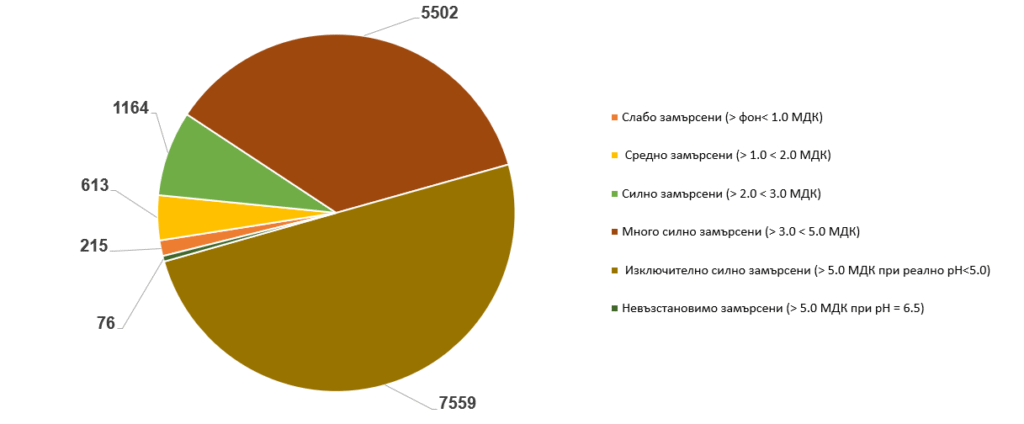
The summarized results indicate that, out of a total of 15.13 ha of agricultural land in the Zlatitsa-Pirdop basin potentially affected by industrial activities in the area, 14.91 ha are contaminated to some extent!
Soil investigations in the immediate vicinity of the industrial site and the tailings storage facility, as well as in adjacent areas, indicate elevated concentrations of heavy metals, particularly copper (Cu) and arsenic (As). Soil acidification is one of the factors contributing to the increased mobility of heavy metals. Data on soil acidity and buffer capacity in soils and soil-forming substrates in the area of the “Chelopech Mining” EAD site (currently “Dundee Precious Metals Chelopech” EAD) show that most soils are acidic and characterized by low buffer capacity, including low content of basic cations, moderate to high hydrolytic acidity, and moderate to low sorption capacity.
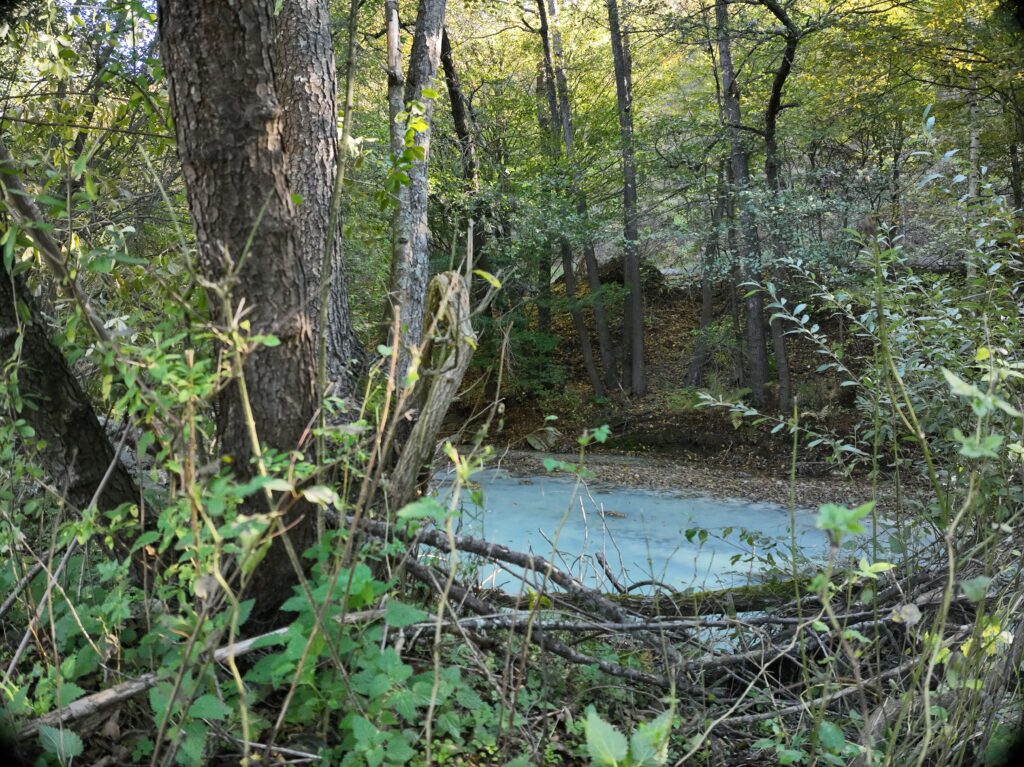
The investigated soils showed a high accumulation of copper (Cu), with concentrations exceeding the maximum permissible levels established by Ordinance No. 3 of 1 August 2008 on the standards for permissible concentrations of harmful substances in soils by 74-580% (up to 6.8 fold). Within the framework of project DТК 02/1, five sites from the regional soil monitoring network were investigated. The results showed that the most contaminated site (Site No. 1) had copper concentrations 2.5 times higher than those measured near the industrial complex (Site No. 2), indicating that atmospheric deposition and prevailing air currents contribute to the spatial distribution of contamination. The fraction of extractable copper demonstrated that approximately 2% of the total copper input is present in the soil solution, as determined by CaCl₂ extraction. These fractions are mainly represented by readily soluble and exchangeable (desorbable) forms, as confirmed by the calculated correlation coefficients. Large-scale monitoring programs have demonstrated the accumulation of heavy metals and arsenic in soils. While elevated concentrations in some areas are associated with naturally increased geochemical background levels, specific locations show evidence of ongoing anthropogenic contamination and increasing soil pollution. A further potential source of pressure on the river ecosystem is the presence of several tailings storage facilities, which may contribute to the deterioration of environmental quality through the release and transport of contaminants.
Long-term heavy metal contamination poses a threat to human health and ecosystems due to their low biodegradability, bioaccumulation potential, environmental persistence, stability, and ecotoxicological properties. In recent years, assessment of the impacts of contamination on the biological activity of soil microbiota has become essential. Soil microbial communities play a key role in nearly all biogeochemical processes in terrestrial ecosystems, including organic matter decomposition, nutrient cycling, plant diversity, and ecosystem productivity. Moreover, soil microbial communities are remarkably diverse and abundant.
Given the inherent heterogeneity of soils, it is necessary to investigate microbial communities across different locations and spatial scales. Accordingly, the study of distinct microbiomes inhabiting a specific environment serves as a case study that contributes to understanding how microbial community structure and function are affected by heavy metal contamination. It is hypothesized that long-term soil contamination with heavy metals (Pb, Zn, Cd, Cu) reduces microbial abundance and alters the taxonomic profiles of native microbial communities. These changes are likely driven both by the persistent presence of heavy metals in soils and by local environmental conditions.
A review of the scientific literature indicates that heavy metals (HMs) substantially reduce soil microbial diversity, microbial biomass, and metabolic activity, or alter community structure. The effects of HMs on microbial community structure and diversity have been investigated using next-generation DNA sequencing (NGS) technologies and reported in numerous studies.