Integrated decision support system for ecological risk assessment supporting decision-making for sustainable agricultural practices in vulnerable areas.
Sustainable agriculture and development strategy
A prominent role in the Strategic Plan for the Development of Agriculture and Rural Areas (2023-2027) and the EU Soil Thematic Strategy (2006, 2011) is attributed to sustainable agriculture. Achieving sustainable and competitive agricultural systems in certain regions requires addressing ongoing soil degradation processes, including the decline of soil organic matter and contamination of environmental compartments. This can be supported through the development of a decision support system (DSS) for site-specific decision-making.
In this context, the TRIAD approach is particularly relevant. The TRIAD framework accounts for the inherent heterogeneity of contaminated sites, enabling the development of a robust conceptual site model that defines site boundaries, differentiates among contaminants, and supports informed site-specific decision-making and remediation planning.
This enables the development of strategies aimed at eliminating, reducing, or managing known and unknown environmental impacts. Decision support systems provide active control over key sources of environmental pressure by integrating information on contaminant activity, sampling density and spatial orientation, soil properties, and other relevant factors influencing soil and environmental status.
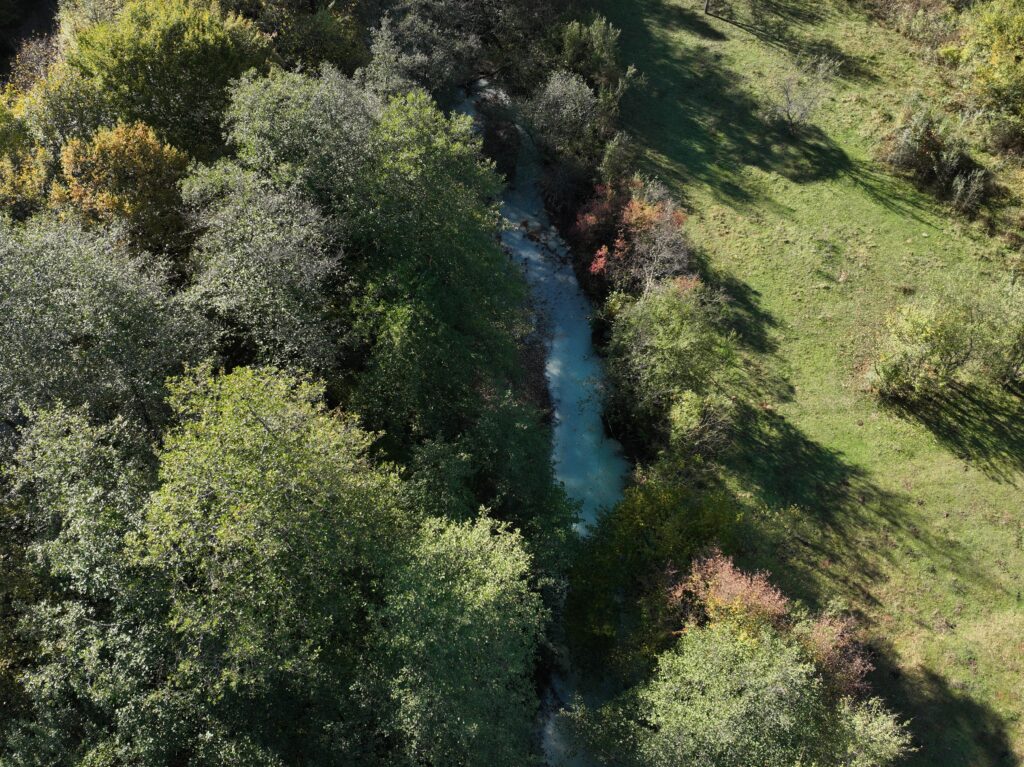
Given the complexity of the study and the need for realistic, application-oriented results, the watershed of the Topolnitsa River has been selected as a representative model site. This system is a highly anthropogenically influenced biotope of major importance for agriculture in Central Southern Bulgaria, together with adjacent agricultural land, including rice-growing areas and farm holdings.
Research Relevance and Significance
Achieving sustainability in society, and particularly in agricultural production, under conditions of climate change requires recognizing ecosystems as an integrated and complex system.
State of research on the issue
There is a lack of awareness regarding the increasing environmental threats resulting from biodiversity loss and the consequent decline in the climate resilience of ecosystems and of human systems dependent on ecosystem services.
Research directions
Research priorities aligned with the National Strategy
Research Hypothesis
Establishing relationships between all soil quality indicators and soil functions can be a highly complex task.
Conceptual Framework
Through the use of mobile in situ investigations, measurement systems, geophysical data, rapid laboratory analyses, and computer-based tools for project planning, data storage, visualization, mapping, processing, and dissemination, a comprehensive final assessment of environmental status and ecological risk for soils and surface waters will be achieved.
Conclusion
Agricultural decision support systems (DSS) have traditionally focused on enhancing the provision of individual soil functions.
Objective
The objective of the project is to collect and integrate analytical data to develop an integrated decision support system for ecological risk assessment, mitigation, remediation, and management of soil contamination processes using the TRIAD approach, with particular emphasis on soil-surface water interactions. Furthermore, the project aims to develop a decision support system (DSS) to support the selection and implementation of appropriate environmentally sustainable agricultural practices and eco-schemes adapted to site-specific environmental conditions.